Akanksha Sharma 2026-01-15
In industrial design, the most critical materials are often the ones that quietly prevent failure, not the ones that attract attention. Butyl rubber belongs firmly in that category. Valued for its exceptional airtightness, aging resistance, and clean performance profile, it has become indispensable in tyres, medical packaging, and infrastructure sealing systems. Its relevance has only grown as industries place greater emphasis on lifecycle performance, compliance, and reliability over time.
But what truly sets it apart? Where does it deliver unmatched value, and where do its limitations require careful consideration?
A clear understanding starts with the fundamentals.
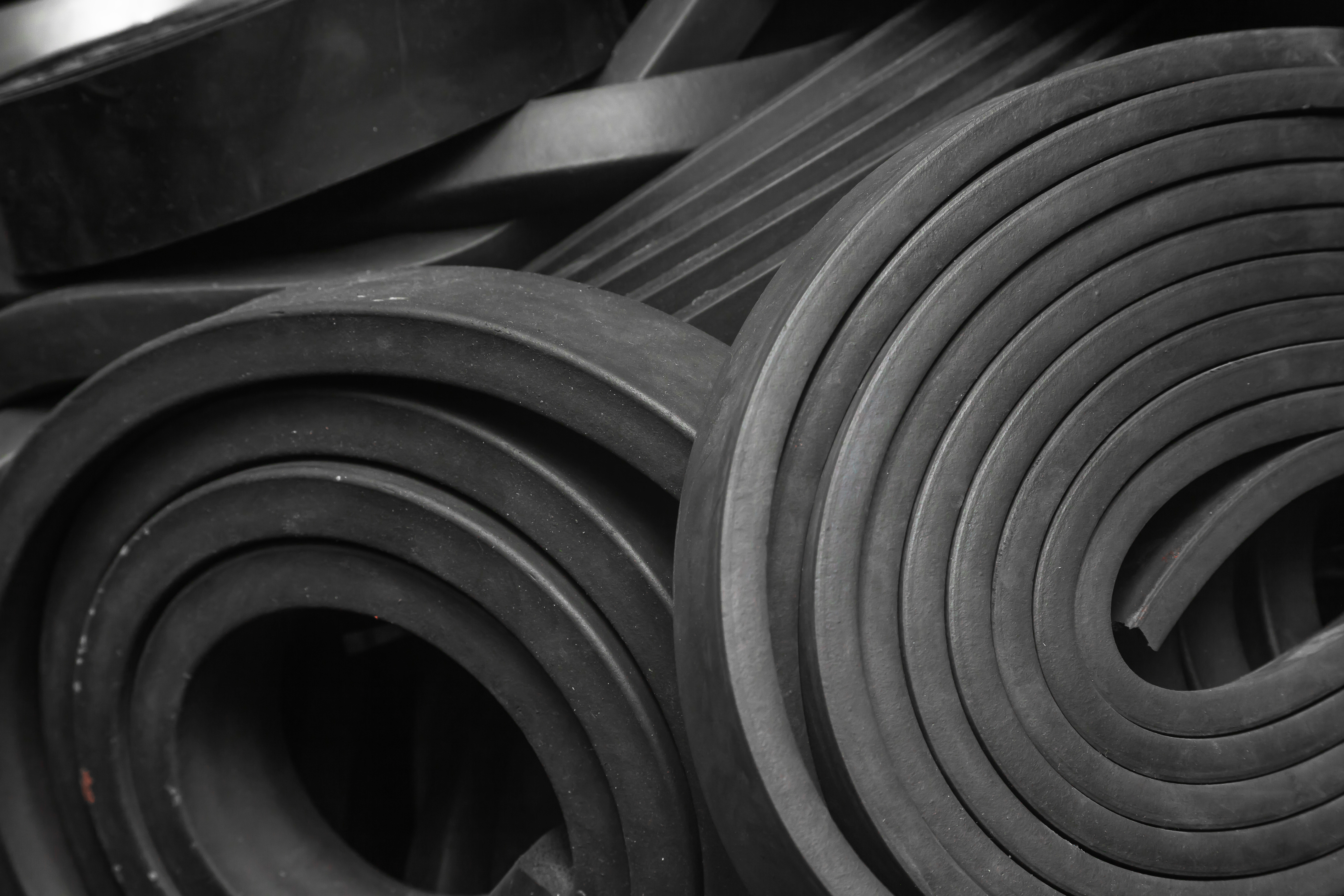
Butyl rubber (isobutylene-isoprene rubber, or IIR) is a synthetic rubber made mostly from (copolymerizing) isobutylene with a small amount of isoprene. Because its molecular backbone contains very few double bonds, the polymer chains are highly saturated and densely structured. This molecular architecture limits gas diffusion and oxidative attack, which is why butyl rubber excels at air retention, flexibility, and resistance to ozone and sunlight.
In modern industry, butyl rubber is chosen when air and gas tightness, long‑term aging resistance, and clean performance matter more than extreme strength or easy processing. Hence, widely used in tyre inner liners, tubes, seals, and pharmaceutical stoppers.
Together, these properties define where butyl rubber excels, particularly in applications where airtightness and long-term stability are critical, complementing other elastomers that are optimized for strength, elasticity, or dynamic performance.
Rather than competing across every mechanical metric, butyl rubber dominates in applications where permeability control and long-term environmental stability are non-negotiable.
In tyre inner liners and tubes, its extremely low gas permeability helps maintain inflation pressure over extended periods. In pharmaceutical closures and medical stoppers, its chemical inertness and low extractables support sealing integrity without compromising purity. In roofing membranes, waterproofing sheets, and expansion joints, its resistance to ozone, sunlight, and aging ensures performance over years of exposure.
In each of these cases, butyl is not chosen for maximum tensile strength or fastest processing speed. It is chosen because failure is simply not acceptable.
Like all elastomers, butyl rubber involves trade-offs.
Its highly saturated structure, the same feature that gives it excellent air retention, also means fewer reactive sites for vulcanization. As a result, cure systems often require more careful tuning, and processing windows may be narrower compared to highly unsaturated rubbers such as natural rubber or SBR.
In high-stress dynamic applications, unmodified butyl may not match the tear strength of certain specialty elastomers. And when blending with other polymers, compatibility must be managed deliberately to avoid uneven curing or property variation.
However, these are not limitations in isolation. They are formulation variables. When addressed through compound design, fillers, and curing strategies, butyl’s performance envelope can be shaped to suit demanding applications.
Much cleaner. More strategic. Less “product criticism.”
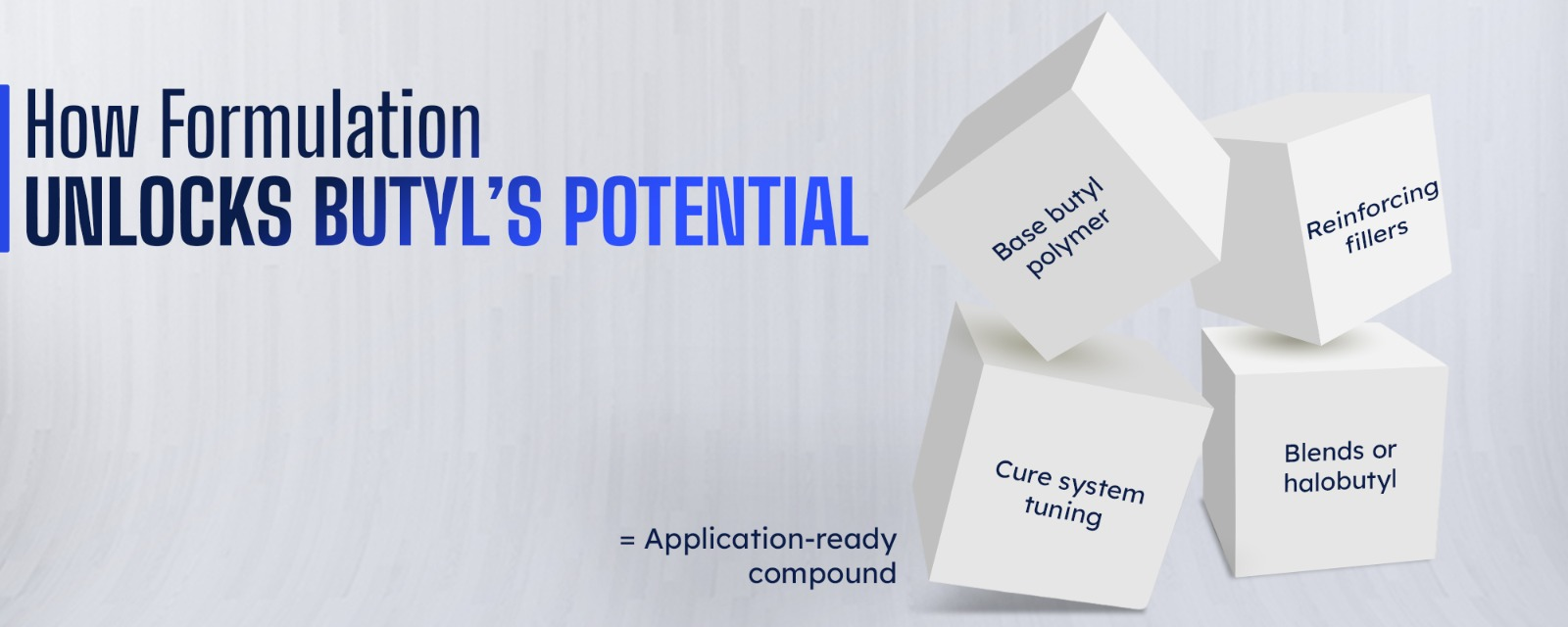
The rubber industry does not simply accept butyl rubber’s constraints; it engineers around them. In practical compounding, reinforcing fillers, resins, plasticizers, and tailored cure systems are used to enhance strength, improve flow, or accelerate curing without compromising impermeability.
Blending strategies, including the use of halobutyl grades, allow manufacturers to retain airtightness while improving adhesion or processing efficiency. In this way, butyl is rarely used in isolation; it is formulated intentionally to deliver precisely what the application demands.
Behind the scenes, the real differentiator is how smartly teams combine the building blocks: choosing between regular and halobutyl grades, balancing sulfur versus peroxide curing, picking the right accelerators, and adapting all of this to actual plant conditions that never look as neat as a datasheet. Here, material expertise becomes central, because consistent butyl performance depends not just on the polymer itself, but on batch‑to‑batch quality, compound design, and how well it fits the end‑use environment. In this context, partners like Rajshila tend to feel more like co‑authors of the formulation, helping with grade selection, compound customization, shared trials, and application‑oriented guidance so that butyl rubber’s advantages show up reliably in real‑world production and not just in theory.
Sustainability is quietly changing how butyl rubber is evaluated; the question is no longer only “does it seal well?” but also “does it help us save fuel, energy, and material over time?”. When butyl inner liners keep tyres properly inflated for longer, they help maintain lower rolling resistance, which supports better fuel efficiency and, indirectly, lower emissions across a vehicle’s life. At the same time, work on devulcanized butyl, better reclaim streams, and more efficient processing is gathering pace as manufacturers look for ways to cut waste and energy use without sacrificing reliability.
In India, this shift also demands material partners who think beyond simply moving products and stay close to how compounds actually behave in local plants. At Rajshila, this means working closely with tyre makers, pharma packagers, and construction players to identify where butyl rubber genuinely adds value, how recycled or lower‑impact options can be incorporated into existing formulations, and which processing trade‑offs make sense in real production environments rather than just in lab trials. With informed selection, thoughtful compounding, and grounded technical support, butyl rubber becomes a dependable, well‑understood asset in the toolkit of Indian manufacturers.
Related blogs


Rajshila Synthetics Pvt. Ltd. 116-117, 1st Floor, NDM-2 Plot D1,D2,D3 Wazirpur Distt. Center, Netaji Subhash Place, Delhi 110034