Megha Thakur 2026-09-03
Think about the products you rely on every day. The running shoe that cushions every stride. The car seal that withstands years of heat and pressure. The electrical cable that quietly performs through changing weather and demanding conditions. We notice them only when they fail. Rarely do we think about the science that keeps them performing day after day.
In manufacturing, lasting performance isn't just about choosing the right rubber or polymer. It's about creating a material that can withstand stress, movement, heat, and time without compromising its integrity. Often, that difference comes down to the chemistry inside the compound.
One such ingredient is Trimethylolpropane Trimethacrylate (TMPTMA), a multifunctional co-agent that plays a vital role in peroxide-cured rubber systems. Though used in relatively small quantities, its contribution to improving cure efficiency and enhancing finished product performance is significant.
At Rajshila, we've spent over four decades working alongside manufacturers who understand that strong products begin with strong raw materials. Whether it's sourcing specialty chemicals or helping customers identify the right solution for their formulations, our focus has always been on delivering consistency where it matters most.
In this blog, we'll explore what TMPTMA is, how it works, where it's used, and why choosing the right TMPTMA suppliers is just as important as selecting the material itself.
Trimethylolpropane Trimethacrylate (TMPTMA) is a trifunctional methacrylate monomer primarily used as a co-agent in peroxide curing systems for rubber and specialty polymers. Unlike conventional additives that serve a single purpose, TMPTMA actively participates in the curing process by creating additional crosslinking sites within the polymer network. This results in a more stable and uniform structure, allowing rubber compounds to achieve improved mechanical and thermal performance.
TMPTMA is widely used in peroxide-cured elastomers such as EPDM, silicone rubber, fluorocarbon rubber, EVA, CPE, and other specialty compounds where durability and long-term performance are essential. Because of its versatility, it has become an important ingredient across industries that demand reliable rubber components capable of performing under challenging operating conditions.
Understanding the characteristics of TMPTMA helps explain why it performs so effectively in rubber formulations. Its three reactive methacrylate groups allow TMPTMA to participate efficiently in free radical reactions during peroxide curing, making it particularly valuable for high-performance rubber compounds.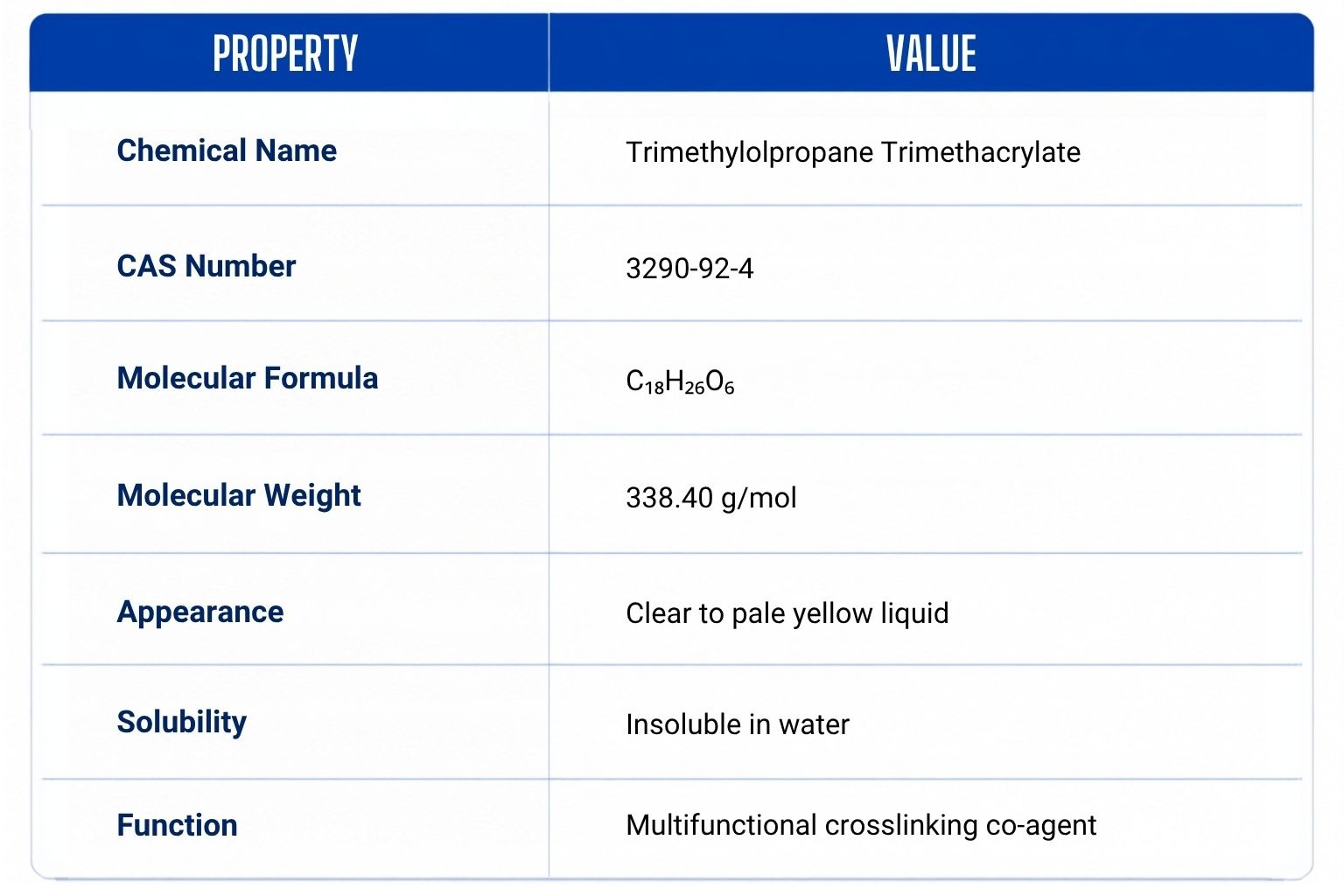
Peroxide curing relies on free radicals to form crosslinks between polymer chains. These crosslinks give rubber its strength, elasticity, and resistance to heat and deformation.
TMPTMA enhances this process by introducing additional reactive sites that readily bond with polymer radicals. Instead of relying solely on peroxide, the curing reaction becomes more efficient, creating a stronger and more uniform molecular network. The result is not simply a faster cure. Manufacturers often experience better retention of physical properties, improved resistance to ageing, and more consistent product quality across production batches.
At Rajshila, we often see that manufacturers focus heavily on polymer selection while overlooking the impact of specialty additives. In reality, carefully chosen co-agents like TMPTMA can significantly influence the final performance of a rubber compound without requiring major formulation changes.
One of the biggest advantages of TMPTMA is its versatility. It supports a wide range of peroxide-cured rubber and polymer applications across multiple industries.
It is extensively used in EPDM, silicone rubber, EVA, fluorocarbon rubber, and other elastomer formulations where improved durability and mechanical performance are required.
TMPTMA is used in rubber and polymer systems for automotive applications such as seals, gaskets and other components where controlled crosslinking and long-term material performance are important.
It can be used as a crosslinking coagent in rubber and polymer formulations for footwear applications, including sole materials, helping support the crosslinked structure and durability of the finished material.
Rubber insulation used in electrical cables requires excellent thermal stability and electrical properties. TMPTMA helps improve the performance of peroxide-cured insulation compounds used in demanding environments.
Beyond rubber, TMPTMA is also used in adhesives, coatings, sealants, composite materials, and polymer modification where controlled crosslinking is essential.
Although these industries manufacture vastly different products, they share one common objective: producing materials that continue performing long after they leave the factory floor.
TMPTMA has become a preferred co-agent because it contributes to both processing efficiency and end-product performance.
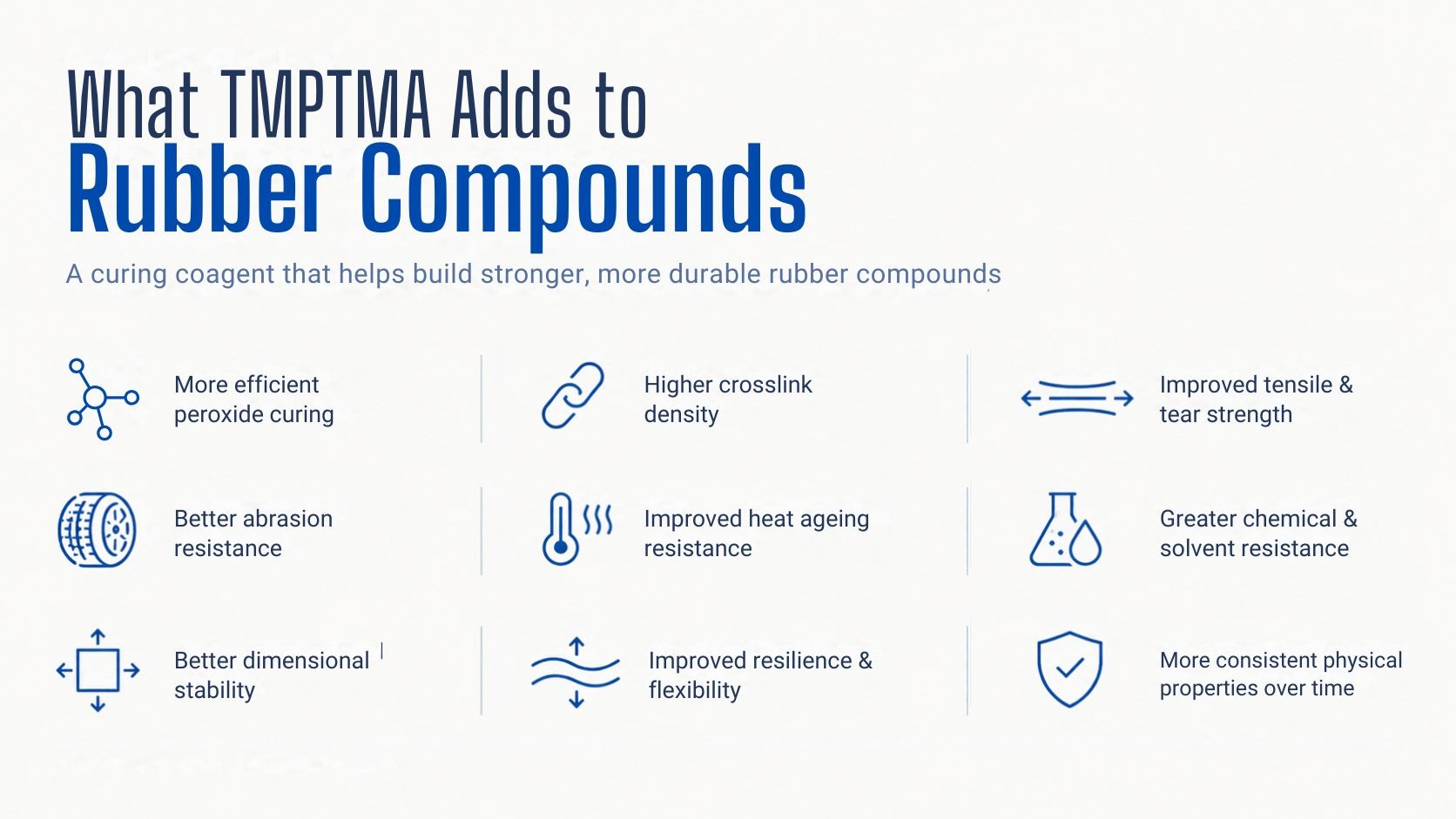
Rather than serving as a replacement for the curing system, TMPTMA strengthens it, enabling manufacturers to achieve better overall results from their formulations.
Like any specialty chemical, TMPTMA delivers the best results when selected and used appropriately.
TMPTMA works best when the formulation is right. Its performance depends on factors such as dosage, compatibility with the compound and the overall curing system. It can also come at a higher cost than conventional additives, making formulation optimisation important.
Handling also needs attention. Direct contact may irritate the skin or eyes, so appropriate personal protective equipment and proper storage conditions are important. For manufacturers, choosing a consistent TMPTMA supplier can help with both material quality and getting the technical support needed for specific formulations.
Peroxide curing systems use a variety of co-agents, each offering distinct advantages depending on the polymer and the desired end properties. Among the most commonly used are TMPTMA, TAIC (Triallyl Isocyanurate), and TAC (Triallyl Cyanurate).
Rather than asking which co-agent is "better," manufacturers should ask which one is best suited to their formulation.
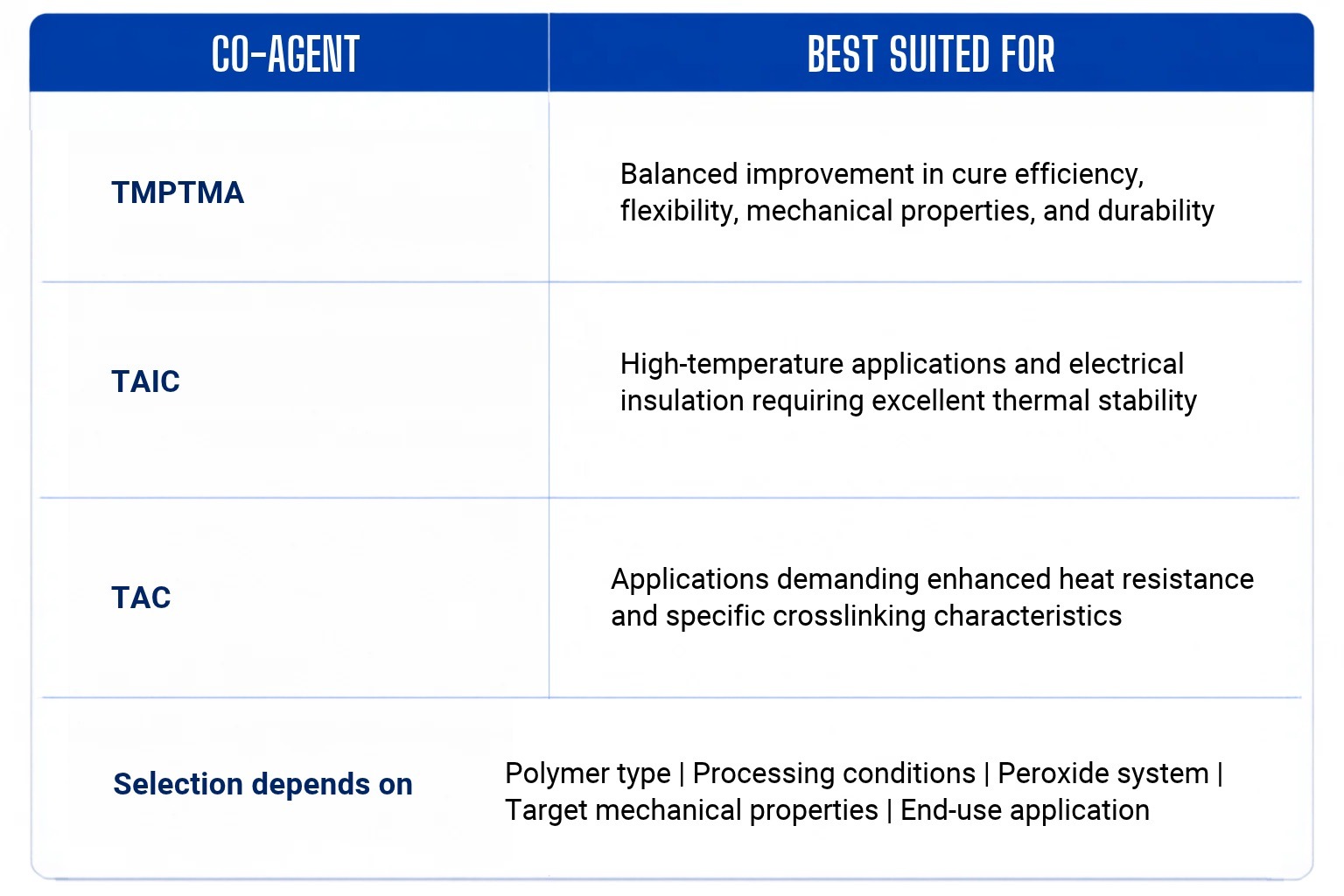
With decades of experience supplying specialty chemicals to the rubber industry, Rajshila works closely with manufacturers to help identify materials that align with both technical requirements and production goals.
Like all specialty chemicals, Trimethylolpropane Trimethacrylate should be handled responsibly to maintain product quality and ensure workplace safety.
Some recommended practices include:
Proper storage not only protects personnel but also helps preserve the chemical's stability and performance throughout its shelf life.
Choosing the right TMPTMA supplier is about more than securing a shipment. It is about building a partnership that supports consistent manufacturing, reliable product quality, and long-term business growth.
For over 40 years, Rajshila has been supplying specialty chemicals and raw materials to industries across India, earning the trust of manufacturers through dependable quality and industry expertise.
Our approach goes beyond distribution. We work to understand our customers' applications, recommend suitable material solutions, and ensure a reliable supply chain that keeps production moving.
When you partner with Rajshila, you benefit from:
Because we believe every high-performing product starts with the right foundation.
At Rajshila, along with Hunan Farida Technology Co., we combine decades of industry expertise with a commitment to quality, helping manufacturers source specialty chemicals they can rely on today and for years to come.
Connect with our team to explore the specialty chemical portfolio and discover the right solution for your rubber and polymer compounding requirements.
Get in touch with Rajshila today and let's build stronger formulations together.
Related blogs


Rajshila Synthetics Pvt. Ltd. 116-117, 1st Floor, NDM-2 Plot D1,D2,D3 Wazirpur Distt. Center, Netaji Subhash Place, Delhi 110034