Akanksha Sharma 2026-08-10
In material engineering, some rubbers are chosen for strength, some for flexibility, and some for chemical resistance. EPDM rubber belongs to a category that is chosen for something more practical than all of these, it is chosen for reliability under exposure.
Across industries like automotive, construction, electrical systems, and industrial manufacturing, it has quietly become a standard material for applications where environmental conditions cannot be controlled. It performs in rain, sunlight, heat, humidity, and long operational cycles without requiring constant maintenance.
At Rajshila, we see material selection as more than comparing specifications on paper. In real-world applications, the value of a material lies in how consistently it performs when conditions change. EPDM is a strong example of that principle: a material chosen not for complexity, but for reliability where it matters.
EPDM stands for Ethylene Propylene Diene Monomer, a synthetic rubber produced using ethylene, propylene, and a small amount of diene monomer.
Its key structural feature is a saturated polymer backbone, which makes it highly resistant to oxidation, ozone attack, and ultraviolet degradation. This structural stability is the reason it is widely used in outdoor applications and long-life systems.
According to material engineering references, EPDM is primarily recognized for its excellent weather resistance, heat stability, and durability in outdoor exposure conditions, while it has limited compatibility with petroleum-based oils and fuels.
EPDM is valued for its ability to maintain consistent performance across changing environmental conditions. At Rajshila, we see this consistency as one of the key reasons it continues to find relevance across industries: when operating conditions keep changing, a material that behaves predictably becomes a practical choice for engineers and manufacturers.
It performs strongly under continuous exposure to sunlight and ozone. Unlike many other rubber materials, it does not crack or degrade easily in outdoor conditions, which makes it suitable for long-term external applications.
It generally performs in a broad temperature range of approximately -40°C to +130°C, depending on formulation. This allows it to maintain flexibility in cold environments and stability in high-heat conditions.
It has strong resistance to water and steam, which makes it useful in sealing systems and waterproofing applications where moisture exposure is continuous.
It is resistant to polar chemicals such as acids and alkalis. However, it does not perform well when exposed to petroleum oils, fuels, or hydrocarbon-based fluids, which is a key limitation in certain industrial applications.
One of its important functional traits is its ability to maintain elasticity over repeated compression cycles. This makes it suitable for gaskets, seals, and vibration dampers that undergo continuous movement and pressure.
EPDM is used across industries where durability under exposure is essential rather than occasional. What makes it interesting is not just the range of applications, but the way it adapts to different roles within those systems. Sometimes it works as a sealing layer, sometimes as insulation, and sometimes as part of a blended material system.
It is widely used in automotive applications such as weather strips, seals, and hoses. Its resistance to ageing, weathering, and temperature variation makes it suitable for demanding automotive environments.
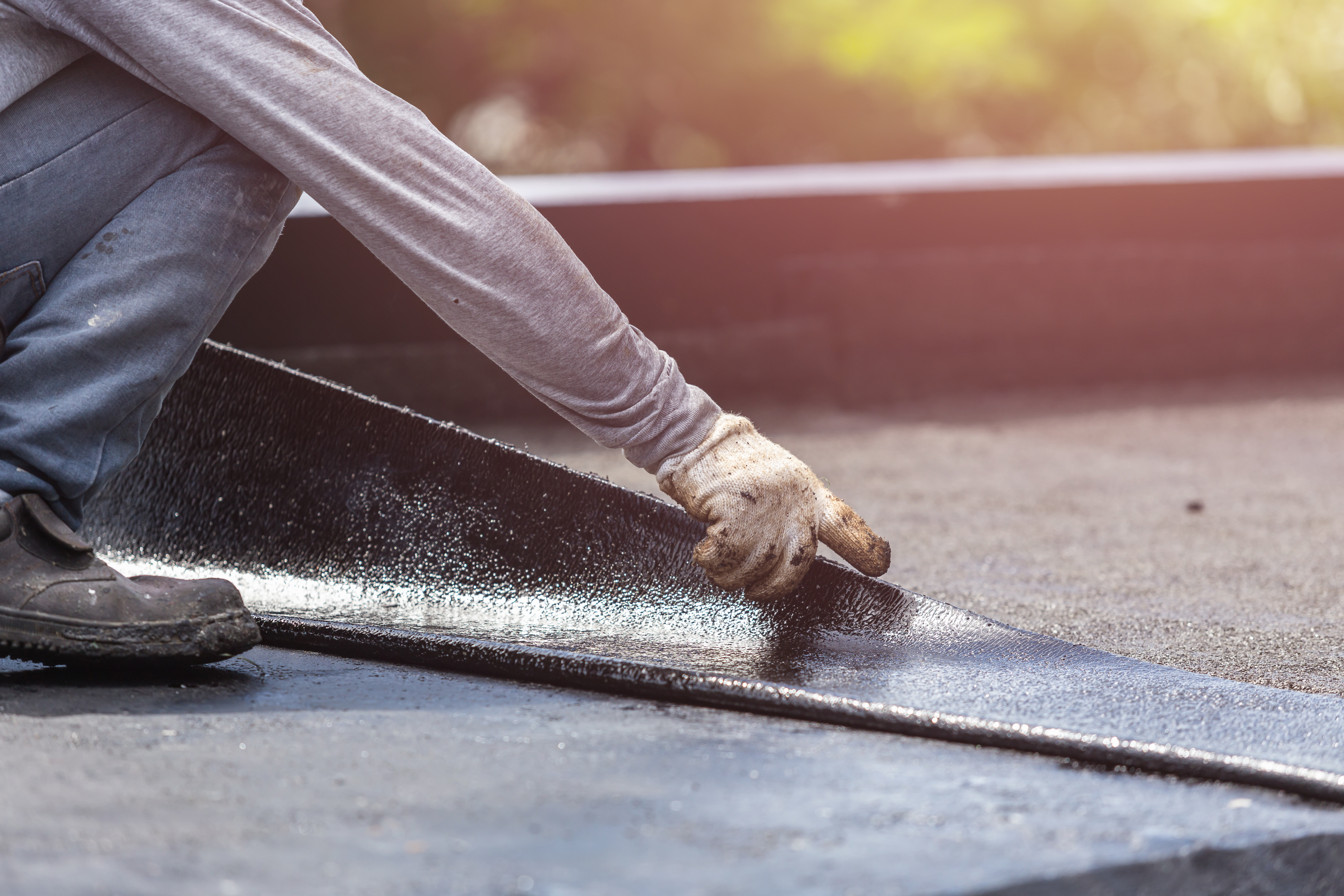
In Infrastructure, It is used in roofing membranes, waterproofing systems, expansion joints, and insulation layers. These applications depend heavily on long-term weather resistance.
It is used in cable insulation and protective coatings due to its electrical resistance and environmental stability, especially in outdoor installations.
In industrial systems, it is used in gaskets, washers, seals, and vibration damping components. It supports system reliability by maintaining sealing performance under pressure and movement.
In footwear and related material systems, it is often used in blended formulations with materials like EVA or other rubbers. It contributes to durability in outdoor and high-exposure conditions rather than acting as the primary cushioning material.
At Rajshila, different grades and formulations of EPDM are matched to different requirements, so the material fits the application instead of being forced into it.
Understanding where EPDM fits becomes easier when it is compared with other commonly used rubber materials. Each has properties that make it suitable for specific operating conditions.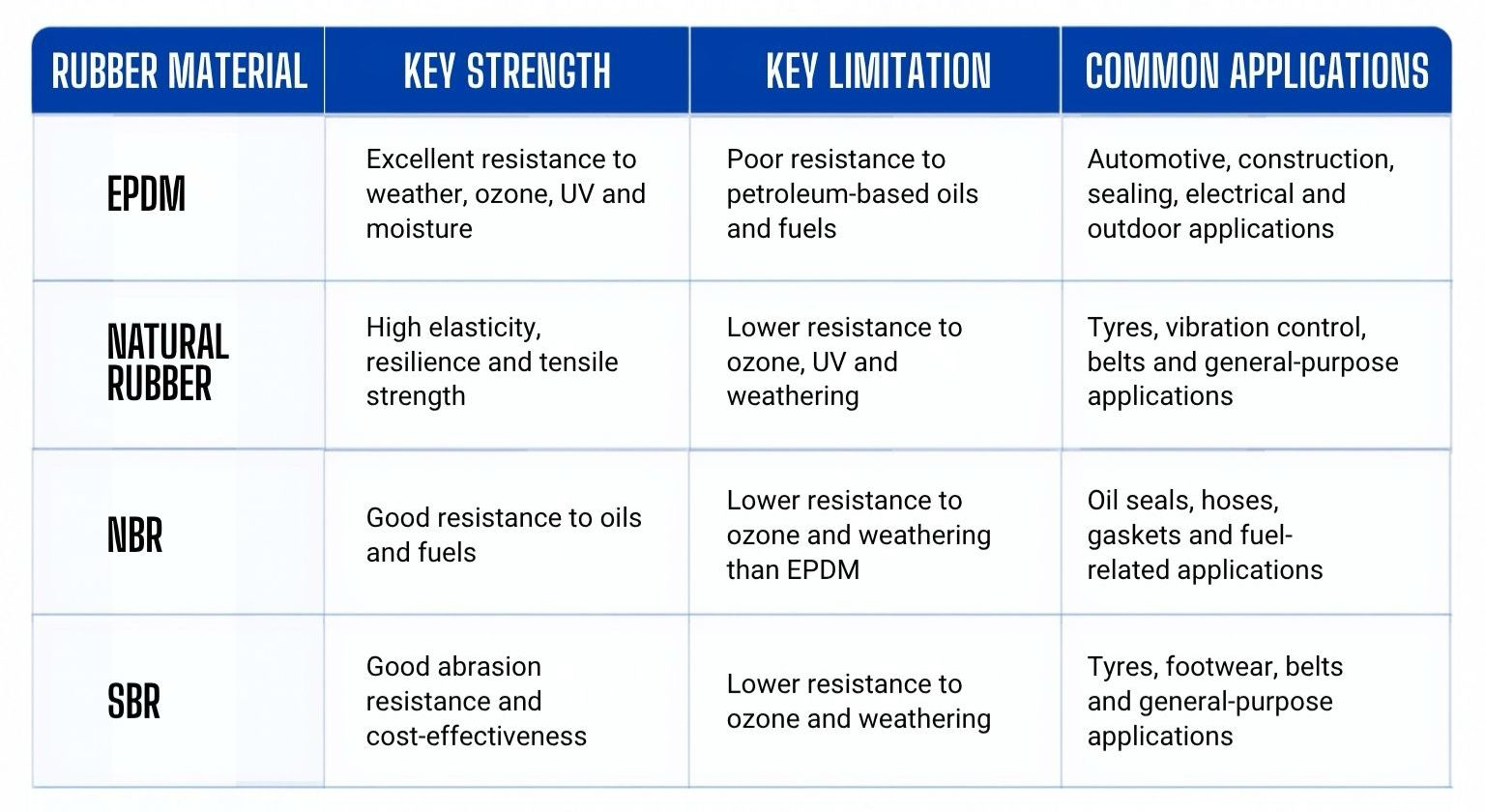 The comparison highlights an important point in material selection: there is no single rubber suited to every environment. EPDM is particularly relevant where long-term exposure to weather, moisture, UV and ozone is a primary consideration, while materials such as NBR may be preferred when oil and fuel resistance is more important.
Choosing the right grade is not simply about material availability. It is about understanding how the material needs to perform in its intended application.
This is why material selection is often as important as material sourcing. At Rajshila, the starting point is the condition the material will operate in, rather than the product itself. Once that is clear, the selection becomes more about matching the right formulation, hardness, and performance range to that condition.
That also means knowing where the material may not be the right fit. While it performs well in weather, heat, moisture, and outdoor exposure, it has poor resistance to petroleum oils, fuels, and other hydrocarbon-based fluids. For applications involving engine oils or fuel systems, another rubber may be better suited to the operating environment.
EPDM rubber is not defined by versatility across all conditions. It is defined by stability in specific environments where weather and time are constant factors. It performs best in systems where long-term exposure is expected and maintenance is minimal. That is why it has become widely used across automotive, construction, electrical, and industrial sectors.
At a material level, it represents a simple principle that is often overlooked; some materials do not need to be exceptional in every condition, they just need to remain consistent in the conditions they are designed for. Rajshila’s lens on materials like EPDM stays aligned with this idea: understanding how materials behave in real environments matters more than how they appear in specifications alone.
If EPDM is part of your application, the next step is usually just clarity on the right grade and fit. Connect with Rajshila, and we’ll help you align the material to the environment it’s meant for.
Related blogs


Rajshila Synthetics Pvt. Ltd. 116-117, 1st Floor, NDM-2 Plot D1,D2,D3 Wazirpur Distt. Center, Netaji Subhash Place, Delhi 110034