Megha Thakur 2026-11-10
Your product's been designed, the vision's set, the idea's visualised and then it doesn't come out the way you wanted. The shape's off, the feel's off, something's just not right.
Why does that happen?
Usually, it's the material. Maybe you weren't fully aware of the options. Maybe the details got skipped. Or maybe you went with whatever was most cost- or time-effective at the time.
It might not seem like a big deal at first, it's "just a material," after all. But the material is what your product eventually becomes. Get it wrong, and you're looking at inconsistent quality, processing issues, material wastage, spiralling costs, and a lot of time spent guessing what went wrong. When it comes to flexible, soft-touch, or durable rubber-like components, understanding the available SEBS and TPE grades can help you make a more informed material choice.
If you're evaluating SEBS or TPE for your project, this guide will help you understand these materials better, choose the right grade, and find a supplier you can actually rely on.
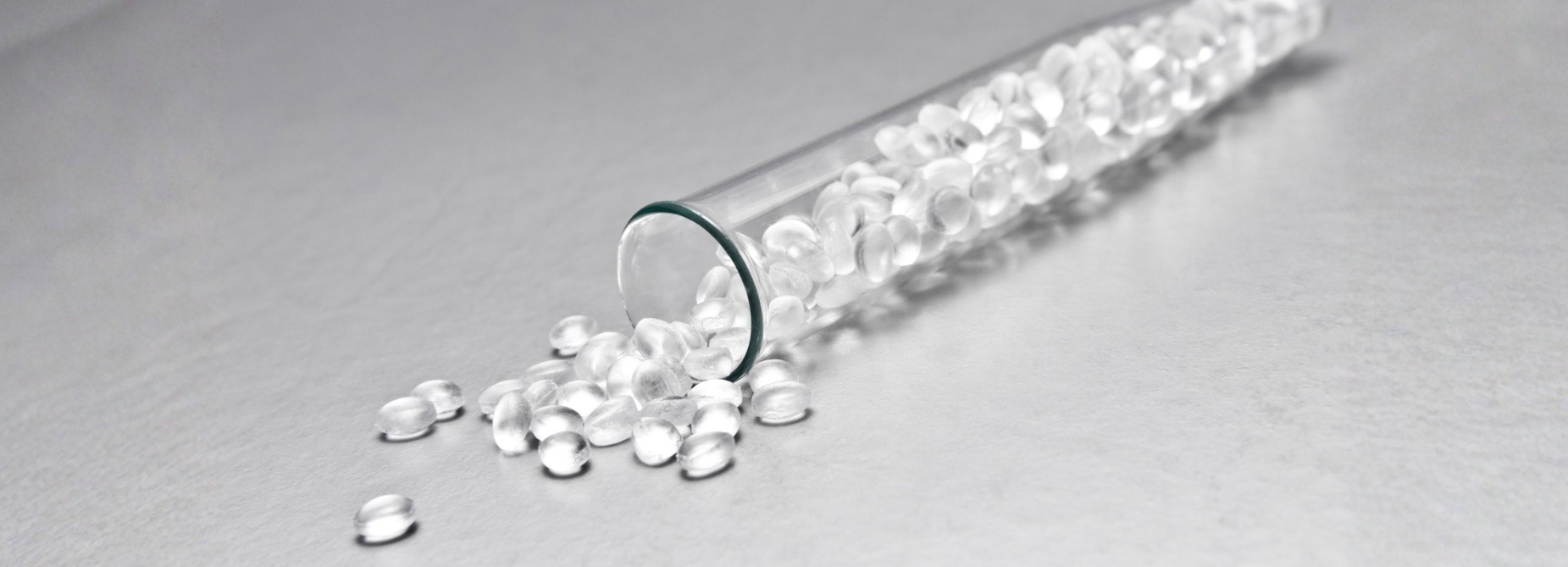
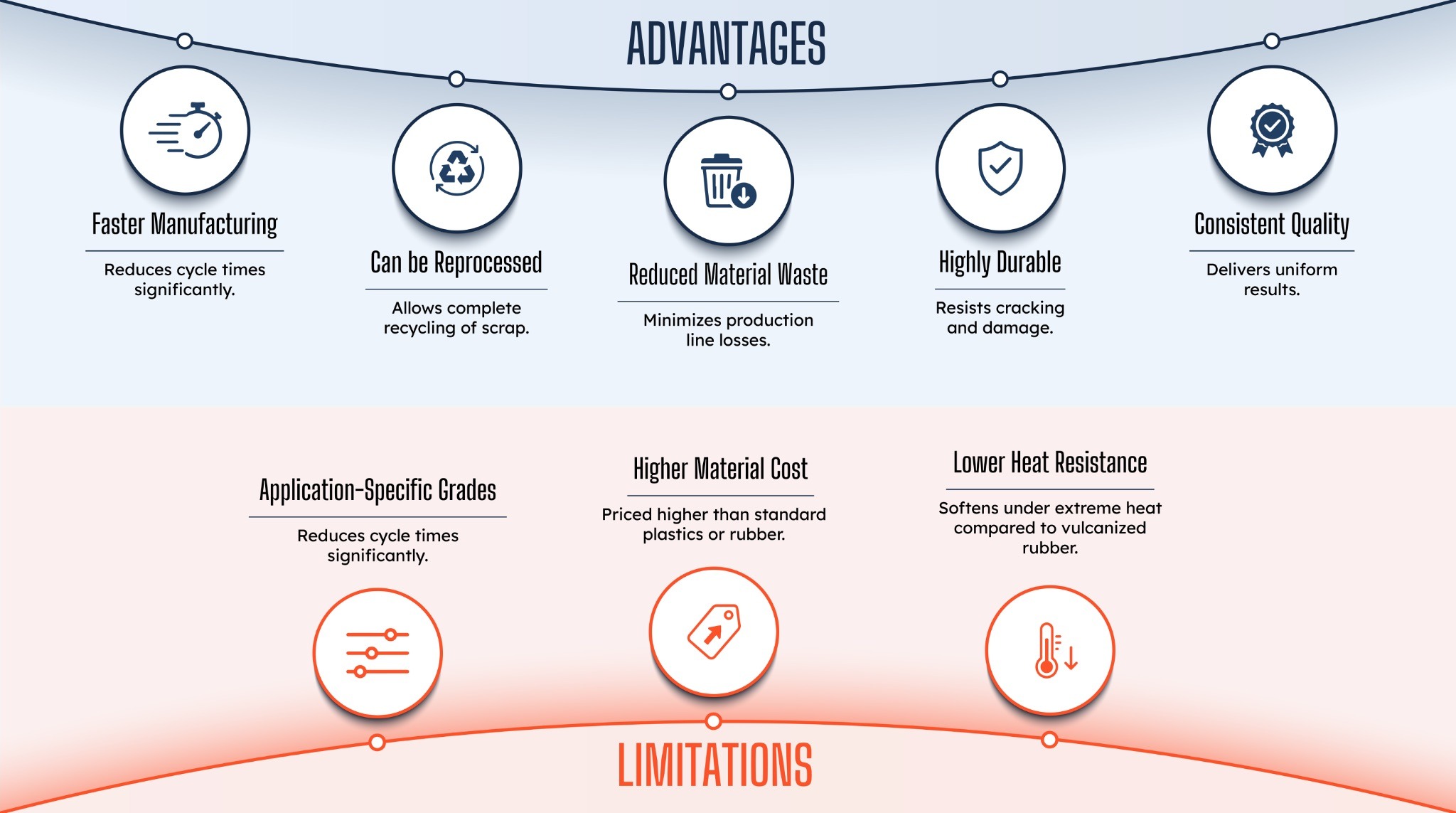
TPE (Thermoplastic Elastomer) is a family of elastomeric materials that are flexible, stretchy, and offer properties similar to rubber, but can be processed like plastic. It is often easier and faster to mould a TPE component than it is to work with traditional rubber.
SEBS (Styrene-Ethylene-Butylene-Styrene) is one of the most versatile and widely used TPE subtypes. Known for its flexibility, processability, impact resistance, chemical stability, and durability, it is widely used in applications that demand both performance and manufacturing efficiency. These properties have made SEBS one of today's most trusted performance elastomers and a preferred choice across industries.
To ensure you lock in the perfect material and the right SEBS supplier or TPE supplier, you first need to break down your application, factory machinery, and final product environment. Ask yourself these foundational questions before placing an order.
Shore A and Shore D are the most commonly used scales for measuring TPE hardness, while Shore OO is suitable for ultra-soft materials.
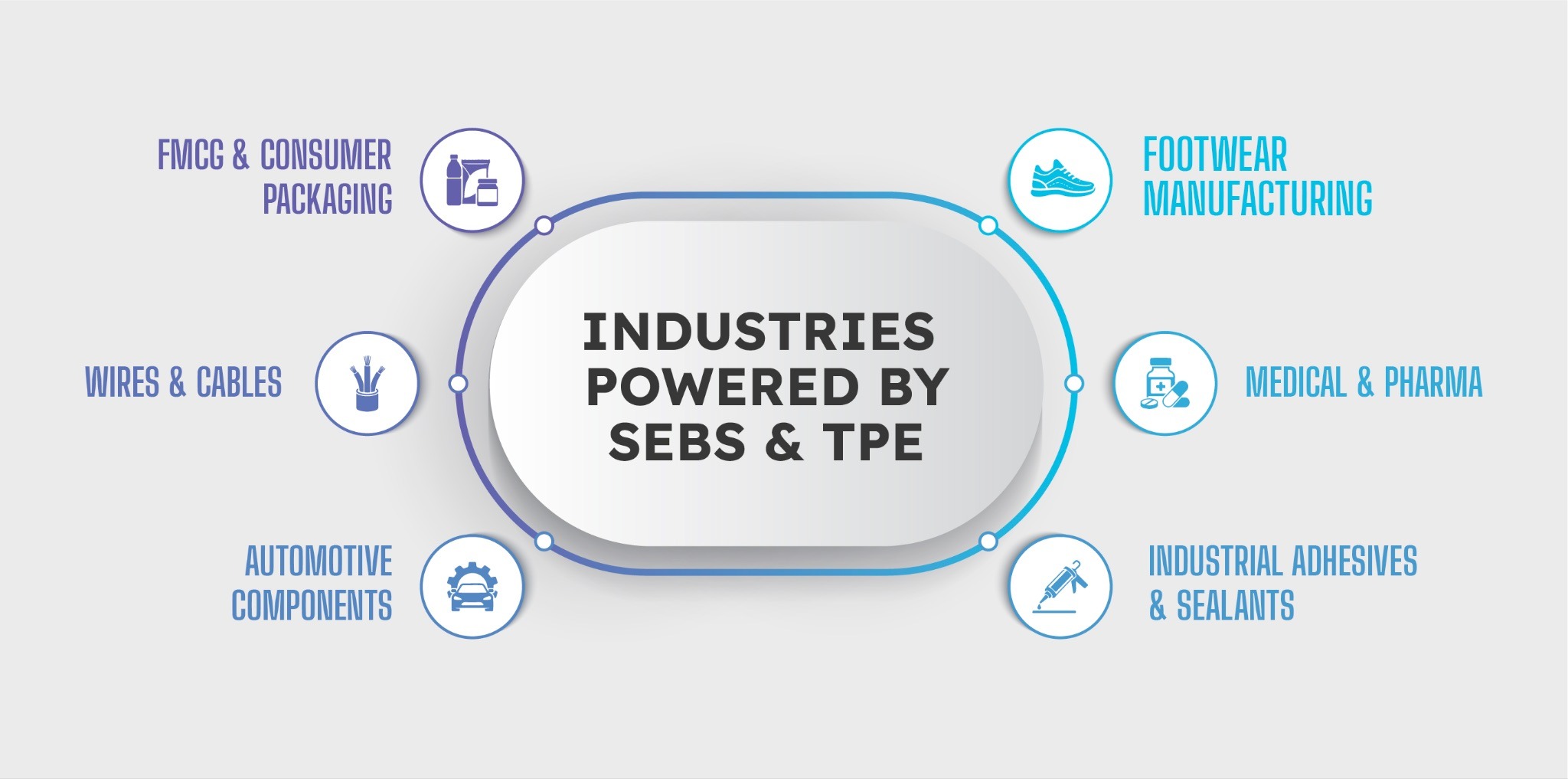
Different industries demand different material characteristics. Let's explore how SEBS and TPE cater to these specific requirements:
Understanding your material requirements is the first step towards building better products. The next is choosing a SEBS supplier or TPE supplier that understands your application, your manufacturing process, and your long-term goals.
Every application has different requirements, and every manufacturer has different challenges. That's why we at Rajshila work closely with businesses to understand what they're building before recommending what's best suited for the job. The goal isn't just to supply a material, it's to help customers make informed decisions that lead to better products and smoother production.
For over four decades, Rajshila has been supporting manufacturers with a wide range of polymer materials, specialty elastomers, rubber raw materials, and rubber processing chemicals, alongside industrial rubber compounds and other material solutions. As a trusted channel partner for globally recognised brands like Kuraray and Versalis, we bring world-class polymer technologies within easy reach of the Indian market, combining globally trusted materials with the local expertise manufacturers can depend on.
A product is only as good as the materials that go into making it. The right grade can mean better processing, greater consistency, and a finished product that delivers exactly what it was designed to do. That's what makes material selection such an important part of manufacturing.
Ultimately, the impact of a material goes beyond the manufacturing process. It shapes the product's performance, durability, and experience long after it leaves the production floor. Getting that choice right is what sets a well-made product apart.
Related blogs


Rajshila Synthetics Pvt. Ltd. 116-117, 1st Floor, NDM-2 Plot D1,D2,D3 Wazirpur Distt. Center, Netaji Subhash Place, Delhi 110034